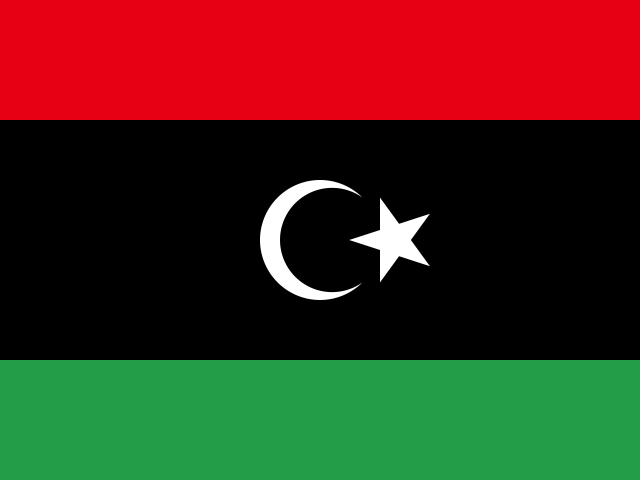
About the Libyan Dinar
The Libyan Dinar was introduced in 1971, replacing the Libyan pound at par following the 1969 coup d'état led by Muammar Gaddafi.
The name 'Dinar' is derived from the ancient Roman coin, the 'denarius'.
Interesting Facts
A Divided Currency
Following the 2011 civil war, Libya had two rival central banks—one in the west and one in the east—issuing competing versions of the Dinar, complicating the economy for years.
Oil is Everything
Libya has the largest oil reserves in Africa, and its economy is almost entirely dependent on hydrocarbon exports. The Dinar's value is directly tied to the ability to produce and export oil.
Gaddafi's Face Removed
Banknotes printed before the 2011 revolution featured the portrait of longtime leader Muammar Gaddafi. Post-revolution notes feature neutral designs and national landmarks.
Historical Timeline
The Libyan pound is introduced upon independence.
The Dinar replaces the pound.
The Libyan Civil War begins, leading to a split in the central bank and competing banknote issues.
The official exchange rate is devalued as part of a currency unification effort.
Denominations
Banknotes
Coins
Security Features
Quick Facts
- ISO Code
- LYD
- Symbol
- ل.د
- Numeric Code
- 434
- Subunit
- Dirham (1/1000)
- Introduced
- 1971-09-01
Central Bank
- Name
- Central Bank of Libya
- Headquarters
- Tripoli, Libya
- Founded
- 1955
- Current Governor
- Saddek Elkaber (since 2011)
Economic Data
- Reserve Currency Share
- 0.0%
- Forex Volume Share
- 0.0%
- Inflation Rate
- 1.9%
- Interest Rate
- 3.00%
Exchange Rates

What Affects the LYD Exchange Rate?
Ready to Convert LYD?
Get real-time exchange rates and convert Libyan Dinar to any currency.


