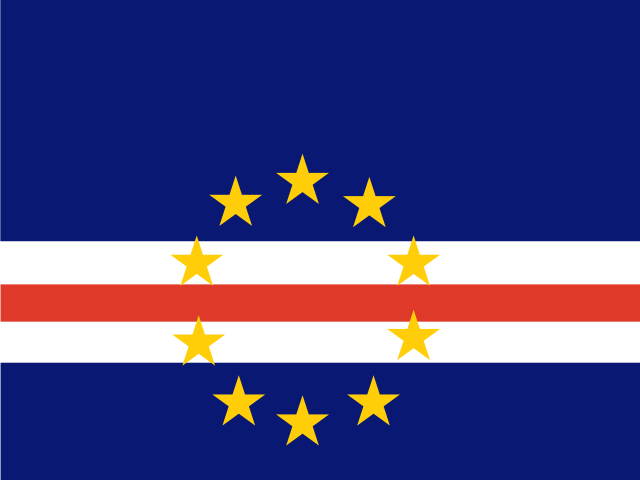
About the Cape Verdean Escudo
The Cape Verdean Escudo was introduced in 1914, replacing the Cape Verdean Real. It was initially pegged to the Portuguese Escudo.
The name 'Escudo' means 'shield' in Portuguese, a reference to the coat of arms on the coins.
Interesting Facts
Pegged to the Euro
The Cape Verdean Escudo has a stable, long-standing peg to the Euro, which provides significant monetary stability for the island nation.
A Musical Currency
The 2000 Escudo banknote honors Cesária Évora, the 'Barefoot Diva', a world-renowned singer of 'morna' music from Cape Verde.
A Bridge to Europe
The currency's peg to the Euro reflects Cape Verde's close political and economic ties with the European Union, particularly Portugal.
Historical Timeline
The Escudo is introduced.
Cape Verde gains independence from Portugal.
The Escudo is pegged to the Portuguese Escudo at a fixed rate.
The Escudo is pegged to the Euro at a rate of 1 EUR = 110.265 CVE.
Denominations
Banknotes
Coins
Security Features
Quick Facts
- ISO Code
- CVE
- Symbol
- $
- Numeric Code
- 132
- Subunit
- Centavo (1/100)
- Introduced
- 1914-01-01
Central Bank
- Name
- Bank of Cape Verde
- Headquarters
- Praia, Cape Verde
- Founded
- 1975
- Current Governor
- Óscar Santos (since 2022)
Economic Data
- Reserve Currency Share
- 0.0%
- Forex Volume Share
- 0.0%
- Inflation Rate
- 1.9%
- Interest Rate
- 0.75%
Exchange Rates




What Affects the CVE Exchange Rate?
Ready to Convert CVE?
Get real-time exchange rates and convert Cape Verdean Escudo to any currency.


